

Maven 5Q: Allegra Huston



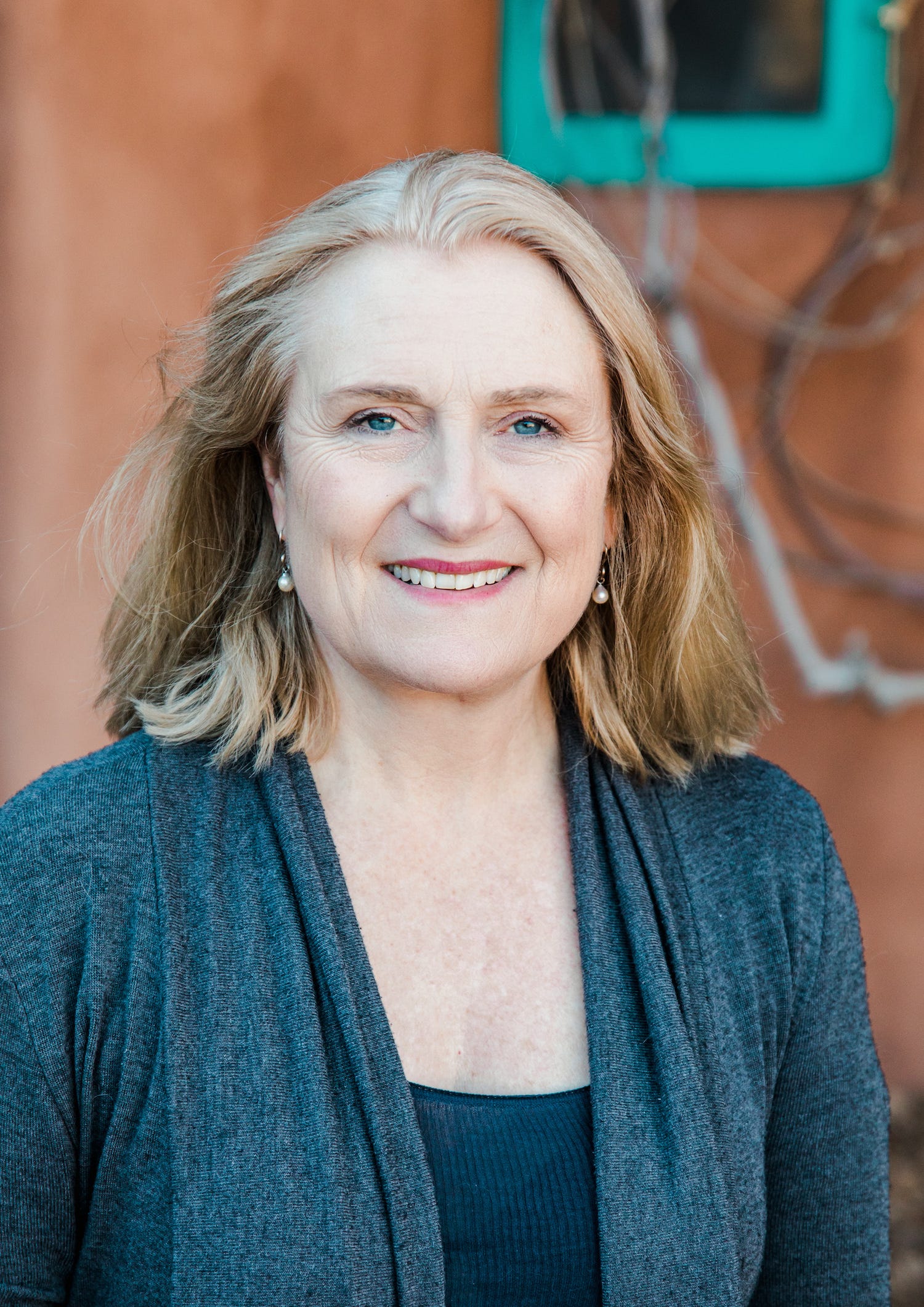
Allegra Huston
I’m the author of Love Child: A Memoir of Family Lost and Found, a novel, many screenplays and articles, and four books for writers including Creative Writing: The Imaginative Storm Method and Write What You Don’t Know: Imaginative Storm Writer Training. I’m currently working on a book about imaginative intelligence, which is the subject of a TEDx talk I’ gave on March 20 in Asheville, NC—even though I live in Taos, NM.
What is the most surprising part of being in this stage of life?
That I feel more like myself than I ever did, though I look less like myself (on bad days). I almost answered “Not giving a shit,” but that’s not true. I do give a shit—just not about what I used to give a shit about: viz., other people’s expectations and opinions of me. I care deeply about living my life well, which means a number of things: bringing as much happiness to others as I can by being generous and open; staying vulnerable and not getting stuck in my own judgments; doing what I can to make the world a better place and not churning around over the dreadful things happening in the world that I can’t affect; doing my work so that I leave something of value after I’m gone; and supporting my son as best I can as he makes his way through life.
What’s one new thing you’re trying to embrace in mid-life?
Not feeling sorry for myself when I hurt. On the whole I love being older, but I don’t love the various aches and pains that go with it.
If you could give yourself a piece of advice 20 years ago, what would it be and why?
Twenty years ago I was 41. I had a three-year-old son whom I desperately wanted to make happy, but didn’t seem to be able to. Much of the time it seemed as if he was walking around under a cloud—which I now understand was the result of wonky brain chemistry that goes under the name of social anxiety disorder. As he explained to me recently, he is frequently in a state of fight/flight/freeze, and has to expend energy to overcome that. When he was little, he couldn’t explain it and I couldn’t understand what the matter was.
Could I have tried to talk to him about it back then? Would it have been successful? I don’t know. But I wish I’d tried. If not at age three, then at five or six. I just took it as my failing, and probably my own stress made things worse.
What’s something that our generation had access to that you’d like to bring back?
Bookstores to browse in. They haven’t gone completely, but these days you’re lucky if you’ve got one in your neck of the woods.
Basic manners, like holding the door for a stranger and acknowledging a driver who lets you in.
If the next 20 years of your life had a theme, what would it be and why?
I feel like I finally know what my work is, so now I want to focus on doing it. I’ve written a memoir and a novel and four books for writers, and I hope soon to finish a fifth. But my primary project is a book about imaginative intelligence, that brings together psychology, neuroscience, theory of mind, culture, and—for want of a better word—self-help. I’m fascinated by how the brain works, and I want to help people understand their own selves better.
Would you like to do the Maven5Q? Please do! Click below….
ICYMI
Some blogs you will enjoy!


 | A guest post by
|
Thank you, Kim, for inviting me to do this questionnaire. The lovely thing about answering questionnaires is that you clarify things for yourself - which certainly happened for me.
I'll second basic manners. 💜
And I understand the anxiety challenges. I didn't know I had an anxiety disorder until I was in my 40s, so now I tell my kids about it ALL THE TIME, hoping they'll be better equipped to manage their own mental health challenges now and in the future.
Wonderful interview! Thank you for the mention, Kim. 🥂